I Redesigned the Evolution of Wing Design to Create a Highly Efficient Drone Wing
Introduction
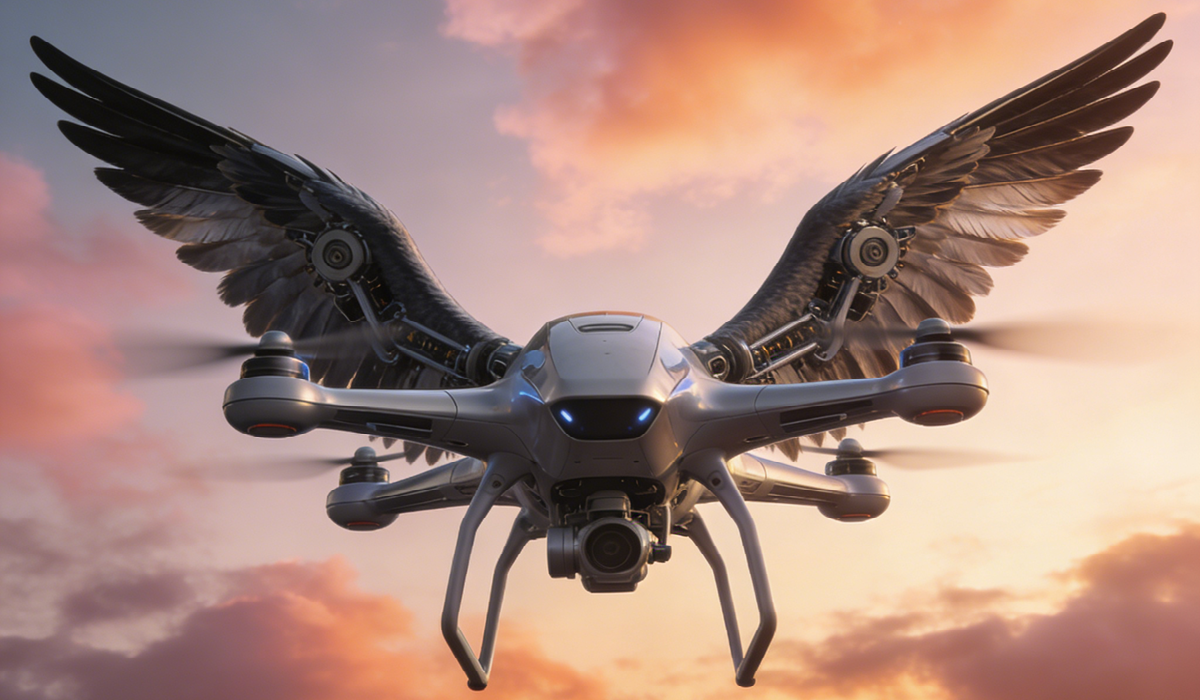
In the evolution of billions of years, birds have improved the art of flight and entered a field that we humans still can't understand or reproduce. Among many顯珠 features, I was especially attracted by the unmistakably curved double-stranded shape. This combination shape is so effective that it appears repeatedly in completely different species.
Why the Shape Works
This combination is so effective that it appears repeatedly in completely different species. We will start from a traditional design wing and use aerodynamics, structural design, human intuition, and of course, some inspirations from birds themselves. We will build it, fly it to the sky, and record its real performance. Then we will hand over the same design space to the intelligent body.
Evolutionary Insights
Life force, foot force, stability, and mobility are all developed through evolution, not engineering. Their wings are not just a flat surface, they are dynamic, flexible structures with twist, constriction, curve, and very unique water-angle features on the field.
Design Process
After rising near the fuselage and passing through the middle part of the fuselage, it rises again at one point. The structure of the combination of the shape of the ghost is not random, but a way to solve problems in multiple species. These species can fly long distances under very little energy. Compared to that, our human aviation usually uses a fixed straight straight combination, or along the single, rectangular, double-edged corners of the fuselage.
Simulation & Tools
We use tools like XFL5 for initial concepts and CFD for detailed 3D flow analysis. I wrote a Python-like processing script and automated analysis of the results. CFD uses vertical method to track the flow around the entire 3D shape. Capturing the sticky effect, the separation between the two, and the shape of a Vogue.
Key Stability Metrics
We focus on static horizontal stability and rolling stability. A stable plane will produce a recovery of the horizontal axis when disturbed. These two indicators show why the concave, double-stranded shape provides advantages without affecting other performance indicators.
Building the Prototype
I designed the fuselage, used CAD tools (Onshape) and 3D printed parts. Installed electronics including DJI OS Pro FPV, MAPL-C flight controller, brushless motor, and tuned center of gravity to 850 grams to meet flight expectations.
Flight Testing & Iteration
The first flight damaged the plane; after inspection and redesign (center of gravity adjustments, new fuselage), the second flight was successful with smooth, efficient flight and low power consumption. Although the flight ended unexpectedly after losing connection, the design proved highly promising.
Next Steps
We will hand the design space to intelligence to simulate evolution and search for even better, more stable, and efficient platforms. Thank you for joining my trip. Don't forget to keep curious, keep creative and continue to build the future.