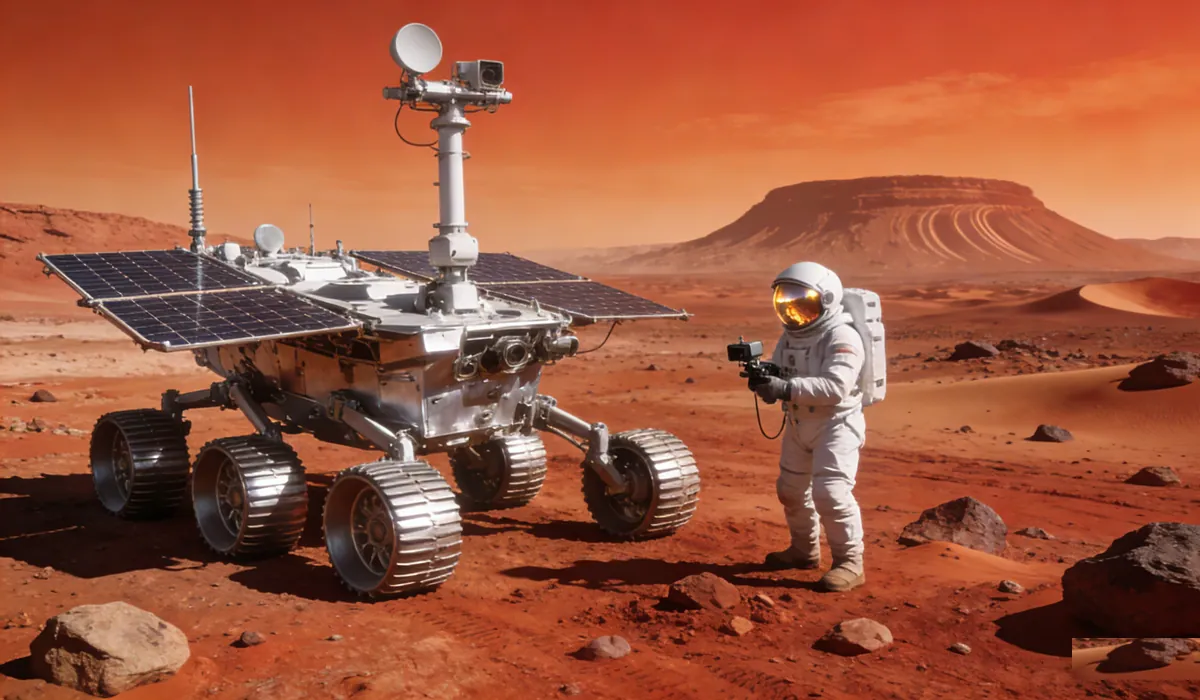
Far from being eternally barren, Mars preserves clear geological records of a time when its surface was wetter and warmer. Orbital imagery and rover investigations reveal ancient river channels, lakebeds, and minerals that only form in the presence of liquid water.
How Mars changed
Several processes likely conspired over billions of years: loss of the magnetic field weakened protection from the solar wind; atmospheric gases escaped to space; volcanic activity waned, reducing greenhouse replenishment; and large impacts reset climate episodes. Together these effects thinned the atmosphere and froze or removed surface water.
Clues from rock and dust
Rover measurements of sedimentary layers and hydrated minerals tell a story of episodic lakes and transient rivers rather than a long-lived ocean. Isotopic ratios in the atmosphere and geological context help constrain when and how the planet lost its thick air.
Why it matters
Reconstructing Mars’ transition provides a laboratory for understanding planetary habitability. It shows which feedbacks can tip a climate from temperate to hostile and guides our search for life on other worlds by clarifying which factors most protect a planet’s environment.