Observing the Universe: Philosophical Insights from Quantum Mechanics
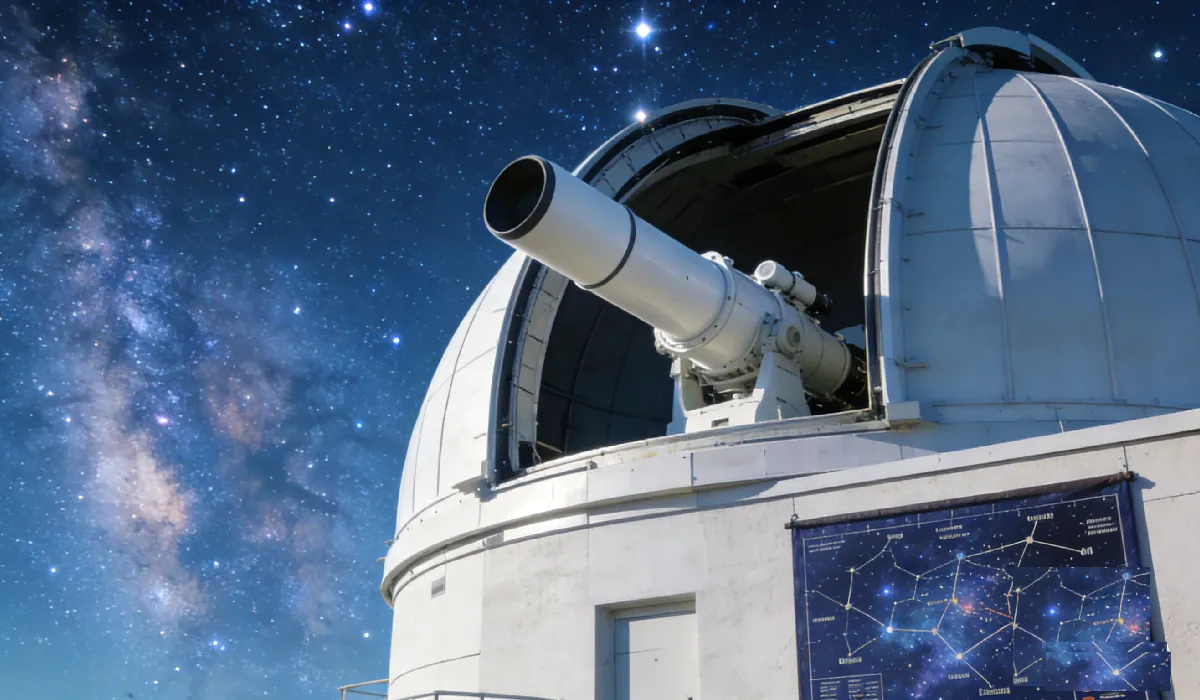
Conceptual illustration of quantum observation
Introduction: The Role of the Observer
Does observing the universe change the universe? In classical physics the observer is neutral, but quantum mechanics upends that idea.
The quantum measurement problem challenges our physical intuition and forces us to rethink the nature of reality. How does observation turn possibilities into certainties?
Quantum Measurement: Wavefunction Collapse
At the heart of quantum mechanics is the wavefunction, describing a superposition of all possible states. Only when we measure does the wavefunction collapse to a definite outcome.
This collapse invites competing interpretations: Copenhagen, Many-Worlds, and decoherence. Each offers a different view of the observer's role.
Illustration of wavefunction collapse
Observer Effect: The Impact of Measurement
In quantum mechanics, the act of measurement influences the system being measured. The effect is obvious in the microscopic world, but does it extend to the cosmos?
Quantum cosmology stretches these ideas to the entire universe. Could our observations shape cosmic evolution?
Reality and Consciousness: A Philosophical Dilemma
Does quantum mechanics imply that consciousness plays a role in shaping reality? Some interpretations propose that awareness triggers wavefunction collapse.
This viewpoint fuels debates about free will, determinism, and the nature of reality.
Philosophical exploration of consciousness and reality
Quantum Mind Theories
Some theories link quantum mechanics to consciousness, suggesting quantum effects in the brain could explain how consciousness emerges.
Quantum Cosmology: Observing the Universe
Quantum cosmology applies quantum mechanics to the entire universe. Do observations influence the universe's initial conditions and evolution?
Inflation and multiverse ideas offer fresh perspectives on these questions.
Experimental Tests: Probing Quantum Theory
Scientists are designing experiments to test competing interpretations of measurement. From Bell tests to quantum gravity probes, these efforts aim to clarify reality's foundations.
Future quantum computers may provide powerful new testing grounds.
Illustration of quantum experiments
Conclusion: Observation and Existence
Observing the universe changes our understanding of the physical world and challenges our ideas about existence itself. Quantum mechanics hints that reality is subtler and more complex than we imagine.
In this world of observers and the observed, each of us is part of the universe's ongoing story.